The Meaning and Importance of Atmospheric Pressure
Atmospheric pressure is the force exerted by the atmosphere per unit area on a surface. Air is made of molecules that have mass and are acted upon by gravity. The air above a surface therefore has weight, and that weight produces pressure.
Pressure is one of the fundamental variables used to describe the atmosphere. Differences in pressure from one location to another are closely associated with wind and weather systems. Pressure observations also form the basis of several aviation instruments and operational settings, particularly the pressure altimeter.
1.1 Pressure as force per unit area
In physics, pressure is defined as force divided by the area over which the force acts:
The SI unit of force is the newton (N), and the SI unit of pressure is the pascal (Pa), equal to one newton per square metre (N/m²). Because atmospheric pressures are large numbers when expressed in pascals, meteorology commonly uses the hectopascal.
1.2 Why pressure decreases with height
Imagine a vertical column of air with the same cross-sectional area from the ground upwards. At the bottom of the column, the surface supports the weight of almost the entire column. At a point higher up, less air remains above that point, so the weight supported is smaller. Atmospheric pressure therefore decreases as altitude increases.
1.3 Pressure and weather
Pressure patterns help meteorologists identify and analyse weather systems. A region of relatively high pressure and a region of relatively low pressure create a horizontal pressure gradient. Air responds to this imbalance and moves, contributing to wind. The pattern and evolution of pressure are therefore important clues when forecasting weather.
Aviation application: A pressure change can affect altimeter indications. Correct pressure settings are essential when determining altitude in relation to an aerodrome or the standard pressure datum. The operational use of QNH, QFE and standard pressure is explained later in this chapter.
Units of Pressure
Atmospheric pressure can be expressed in several units. Aviation meteorological reports commonly use hectopascals (hPa). Other units appear in textbooks, historical records, instrument scales and some national practices.
| Unit | Meaning | Reference value at ISA MSL |
|---|---|---|
| Pascal (Pa) | One newton per square metre | 101,325 Pa |
| Hectopascal (hPa) | 100 pascals | 1013.25 hPa |
| Millibar (mb) | One thousandth of a bar | 1013.25 mb |
| Millimetres of mercury (mmHg) | Pressure represented by a mercury column height | 760 mmHg |
| Inches of mercury (inHg) | Pressure represented by a mercury column height | 29.92 inHg |
2.1 Hectopascals and millibars
One hectopascal is exactly equal to one millibar: 1 hPa = 1 mb. The two units therefore have the same numerical value. Hectopascal is the standard unit used in contemporary aviation meteorological reporting.
2.2 Standard sea-level reference
The ISA mean sea-level pressure is 1013.25 hPa. The corresponding reference values are 101,325 Pa, 1013.25 mb, 760 mmHg and approximately 29.92 inHg. Do not confuse this standard reference with the actual pressure reported at a particular aerodrome on a particular day.
2.3 Converting between units
For conversions involving mercury-column units, standard training material gives the following proportional relationships:
Worked example 1 — hPa to mmHg: Convert 986 hPa to mmHg.
Rearrange the relationship: mmHg = 986 × 760 ÷ 1013.25 = 739.6 mmHg (approximately).
Worked example 2 — mmHg to hPa: Convert 783 mmHg to hPa.
hPa = 783 × 1013.25 ÷ 760 = 1043.9 hPa (approximately).
Measuring Atmospheric Pressure
Atmospheric pressure is measured using a barometer. Two traditional instruments described in the reference material are the mercury barometer and the aneroid barometer. A barograph uses the aneroid principle to produce a continuous record of pressure changes.
3.1 Mercury barometer
A traditional mercury barometer consists of a glass tube filled with mercury and inverted into a reservoir containing mercury. Atmospheric pressure acts on the surface of the mercury in the reservoir and supports the column in the tube. The height of the column changes as atmospheric pressure changes.
Under ISA sea-level reference conditions, the column is approximately 760 mm (29.92 in) high. Higher atmospheric pressure supports a higher mercury column; lower pressure supports a lower column. The instrument requires temperature correction because mercury expands and contracts as its temperature changes.
3.2 Aneroid barometer
An aneroid barometer uses a partially evacuated, flexible metal capsule. When external atmospheric pressure changes, the capsule contracts or expands. A system of mechanical linkages transfers this small movement to a pointer or display. Unlike a mercury barometer, it does not require a liquid column.
Aneroid mechanisms are compact and suitable for instruments that need to respond to pressure changes. The pressure-sensing principle is important in understanding mechanical barometric instruments, including traditional altimeters.
3.3 Barograph
A barograph is designed to record pressure continuously over time. In the traditional instrument, a rotating drum carries a chart and a pen traces the pressure response from an aneroid mechanism. The resulting trace allows the observer to identify pressure tendency—the way pressure has risen or fallen over a period.
Pressure tendency can help a meteorologist assess the development or movement of weather systems. A single pressure value tells what pressure is at one time; a continuous record shows how it is changing.
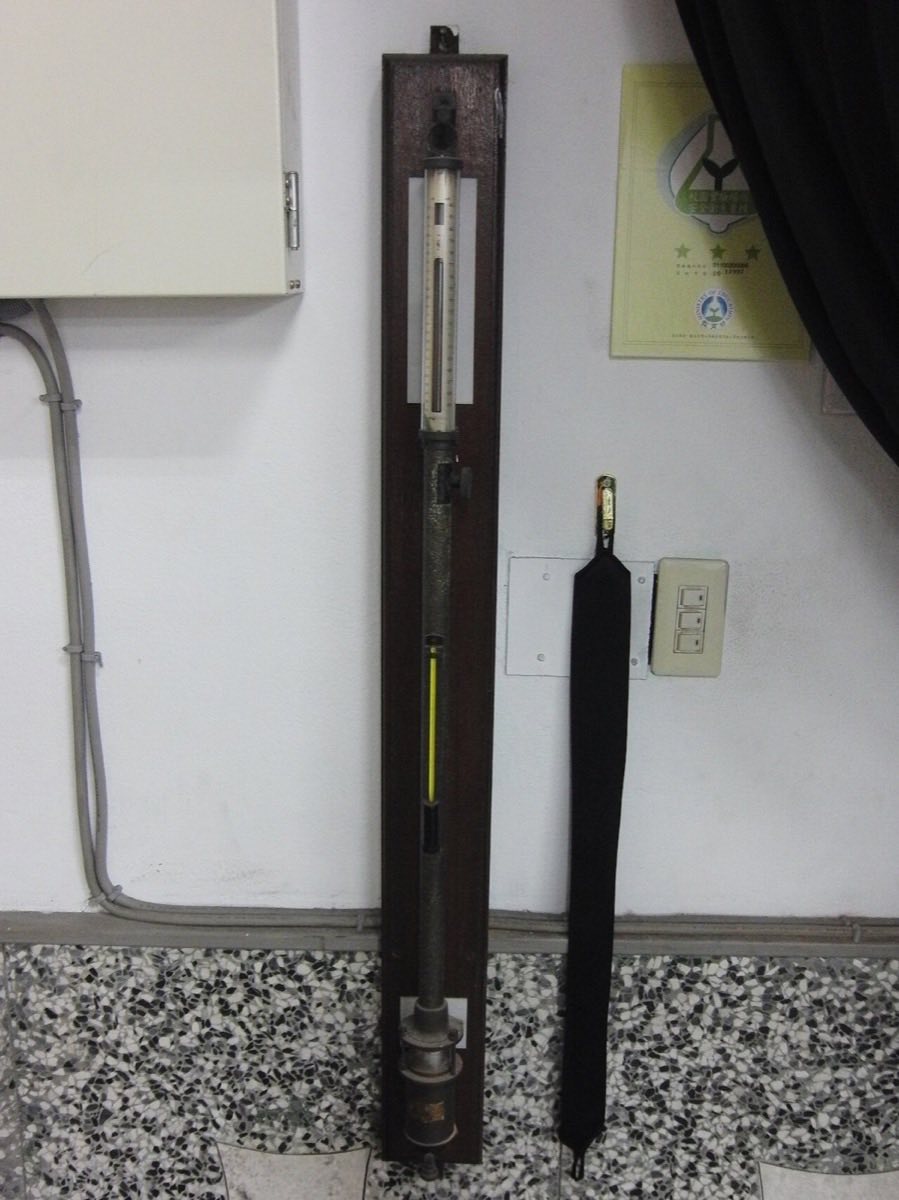
Image: GOKLuLe · CC BY-SA · Wikimedia Commons. Internet connection required.
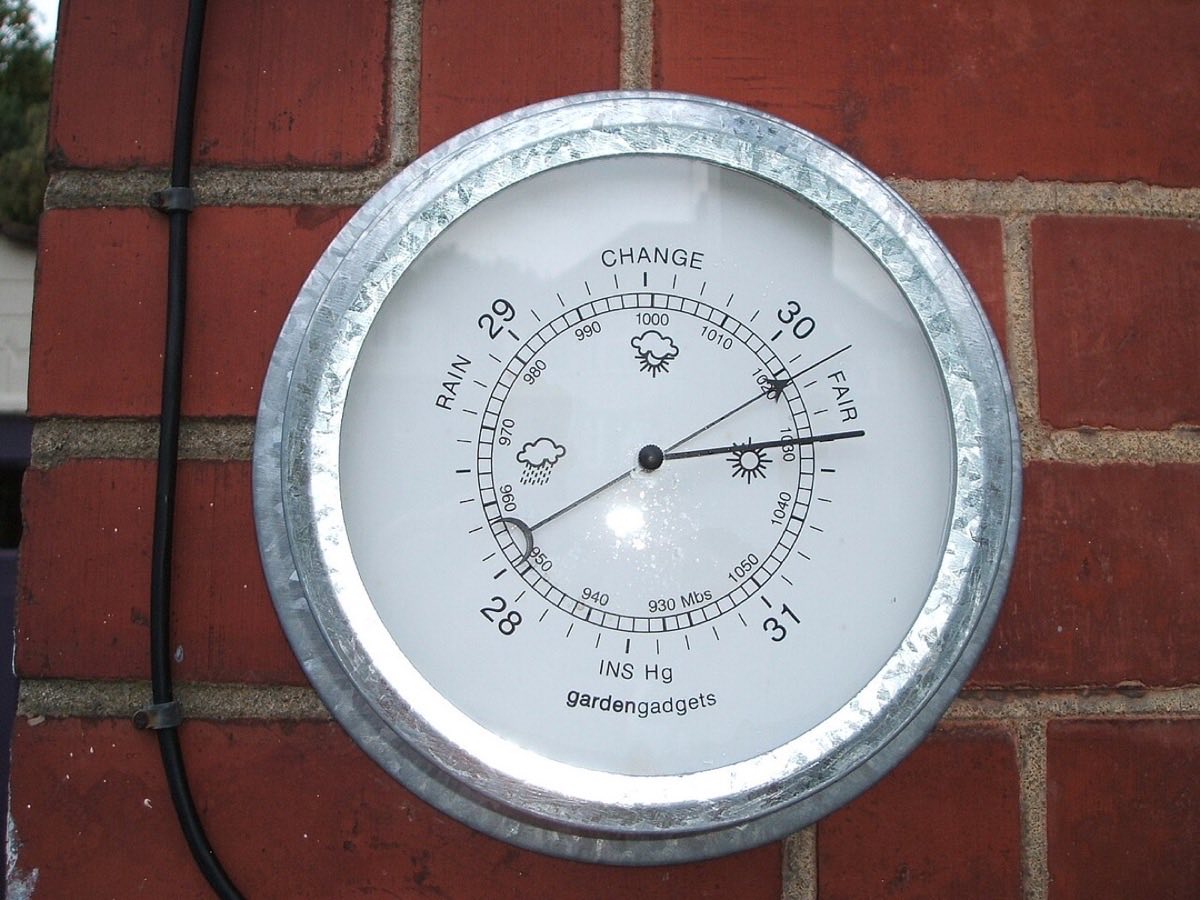
Image: Agnellous · public domain · Wikimedia Commons. Internet connection required.
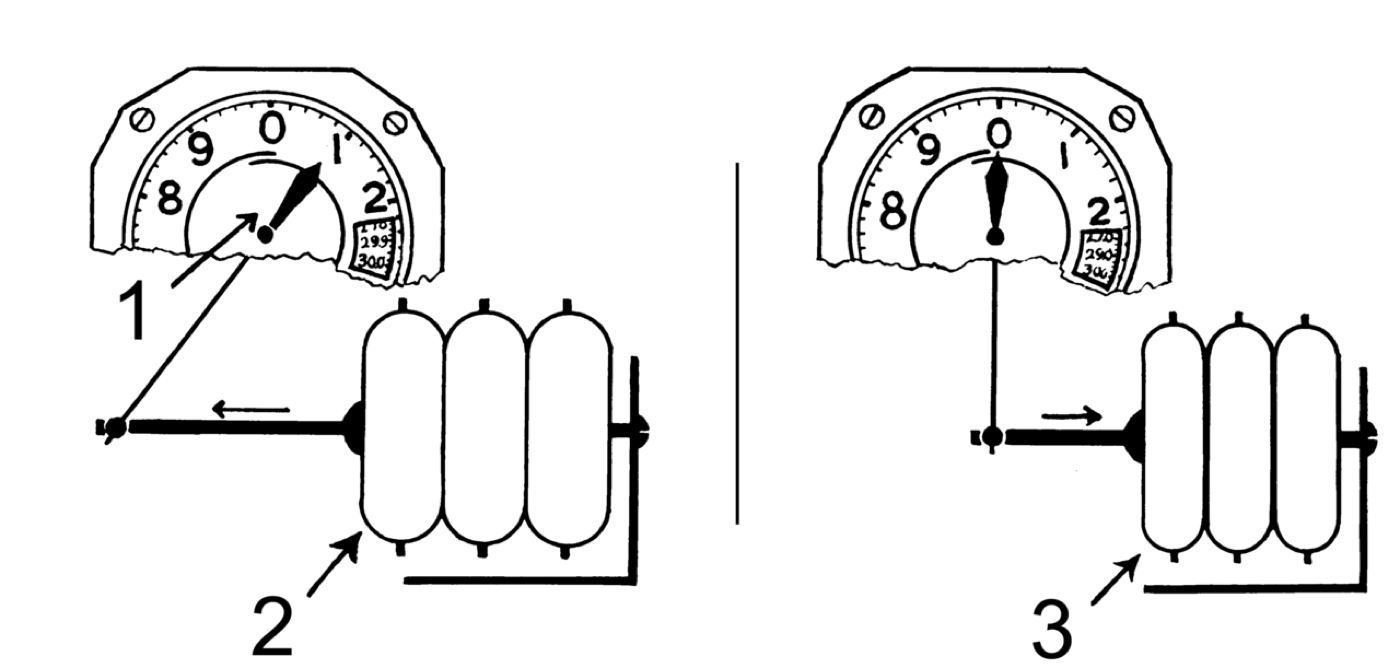
Image: Pearson Scott Foresman · public domain · Wikimedia Commons. Internet connection required.
How Atmospheric Pressure Varies
Atmospheric pressure varies with altitude, from place to place and over the course of a day. The reference material describes these as vertical, horizontal and diurnal variations.
4.1 Vertical variation
Pressure decreases as altitude increases because the amount and weight of air above a point becomes smaller. The rate of pressure decrease is not constant. Near mean sea level, a small vertical change corresponds to a relatively small pressure change; at higher levels, a larger vertical distance is associated with the same pressure difference.
Standard training material gives these approximate standard pressure-level relationships:
| Pressure | Approximate pressure altitude |
|---|---|
| 1013.25 hPa | Mean sea level |
| 700 hPa | 10,000 ft / FL100 |
| 500 hPa | 18,000 ft / FL180 |
| 300 hPa | 30,000 ft / FL300 |
| 200 hPa | 40,000 ft / FL400 |
4.2 Temperature effect on pressure change with height
Temperature affects the vertical spacing between pressure surfaces. Warm air expands, so a given pressure change generally corresponds to a greater vertical distance in a warm air column. Cold air is denser and more contracted, so the same pressure difference generally occurs over a smaller vertical distance.
This is why pressure surfaces are not at exactly the same geometric altitude everywhere. It is also a foundation for understanding altimetry errors and upper-air charts, which are covered in later lessons.
4.3 Horizontal variation
Pressure differs between locations at the same level. These horizontal differences form pressure gradients. Air tends to accelerate from higher toward lower pressure, while Earth's rotation and friction modify its direction and speed. The resulting wind field is a major part of weather systems.
4.4 Diurnal variation
Pressure also undergoes a small daily oscillation. Standard training material describes two higher values, around 1000 and 2200 local time, and two lower values, around 0400 and 1600. The difference is small—about 1 hPa in temperate latitudes and around 3 hPa in tropical and subtropical latitudes in the reference's account.
This regular oscillation matters when interpreting pressure tendency. A small rise or fall should not automatically be attributed to an approaching weather system without considering the normal daily variation.
Aerodrome Pressure Settings: QFE
Pressure settings are values used with a pressure altimeter to establish a reference surface. The three terms introduced in this chapter are QFE, QNH and QFF. They are not interchangeable: each represents a different pressure reference or correction method.
5.1 Definition of QFE
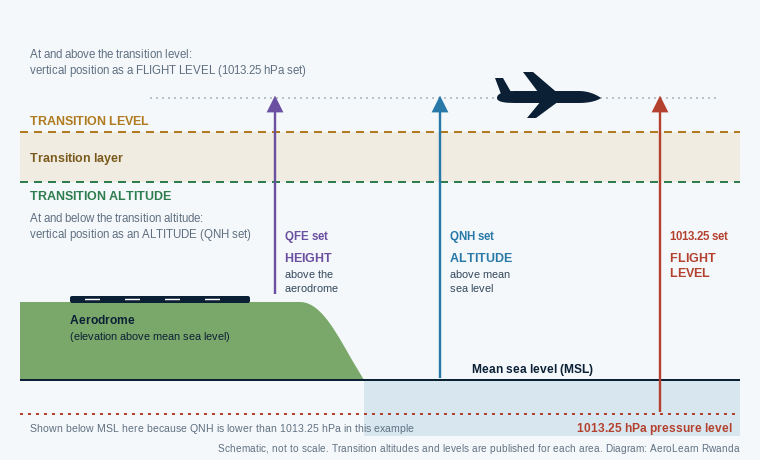
QFE is the atmospheric pressure measured at the aerodrome reference point (or at the specified aerodrome datum). When QFE is set on a correctly calibrated pressure altimeter, the instrument indicates approximately zero when the aircraft is at that reference point.
When airborne with QFE set, the altimeter indicates height above the QFE reference level, subject to the usual limitations of pressure altimetry and atmospheric conditions.
5.2 Operational interpretation
QFE makes the aerodrome reference point the altimeter's zero datum. The displayed value is therefore a height relative to that point, rather than an elevation above mean sea level. Use of QFE depends on the procedures and practices in force; pilots must follow the applicable state and operator procedures.
QNH and Standard Pressure Setting
6.1 Definition of QNH
QNH is the aerodrome pressure reduced to mean sea level using the assumptions of the International Standard Atmosphere. It is calculated from the measured aerodrome pressure using the aerodrome elevation and the standard pressure/temperature relationship.
When QNH is set, an altimeter at the aerodrome reference point indicates the aerodrome elevation above mean sea level, rather than zero. QNH is therefore a practical setting for relating aircraft altitude to mean sea level and terrain elevations.
6.2 Rounding convention in the text
The text describes QNH as a whole number, rounded down, without decimal places. Actual operational reporting and setting procedures must follow the applicable current regulations and local procedures; do not assume a textbook convention overrides current operational instructions.
6.3 Standard pressure setting (SPS)
The standard pressure setting is 1013.25 hPa, commonly spoken and displayed operationally as 1013 hPa. When the standard setting is used, the altimeter indicates pressure altitude. Above the transition altitude, aircraft normally use the standard pressure datum and express vertical position as flight levels, subject to the applicable procedures.
QFE → zero at the aerodrome reference point.
QNH → aerodrome elevation at the aerodrome reference point.
1013.25 hPa → pressure altitude / flight-level reference.
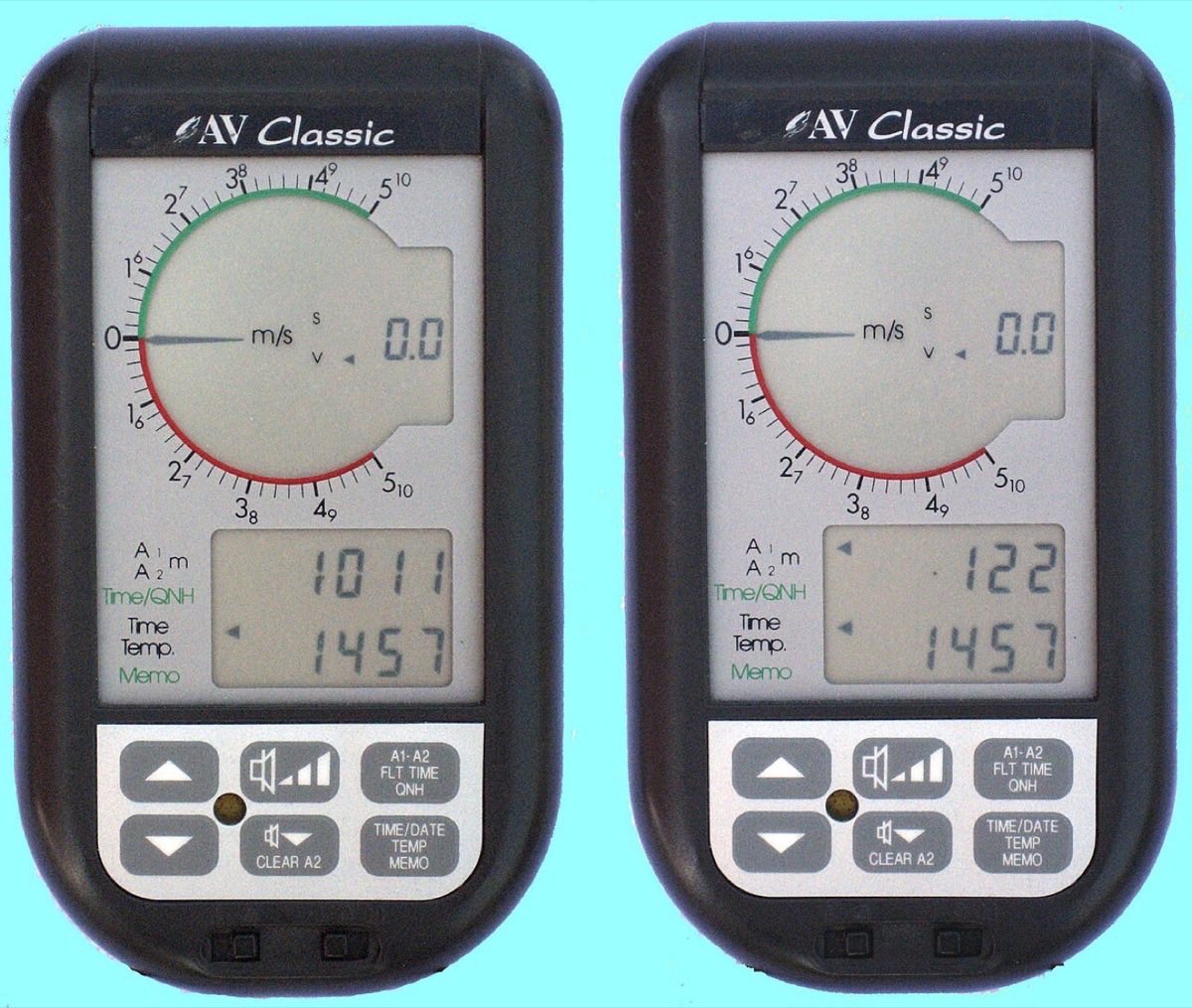
Image: Andreas Hannusch · CC BY-SA 3.0 DE · Wikimedia Commons. Internet connection required.
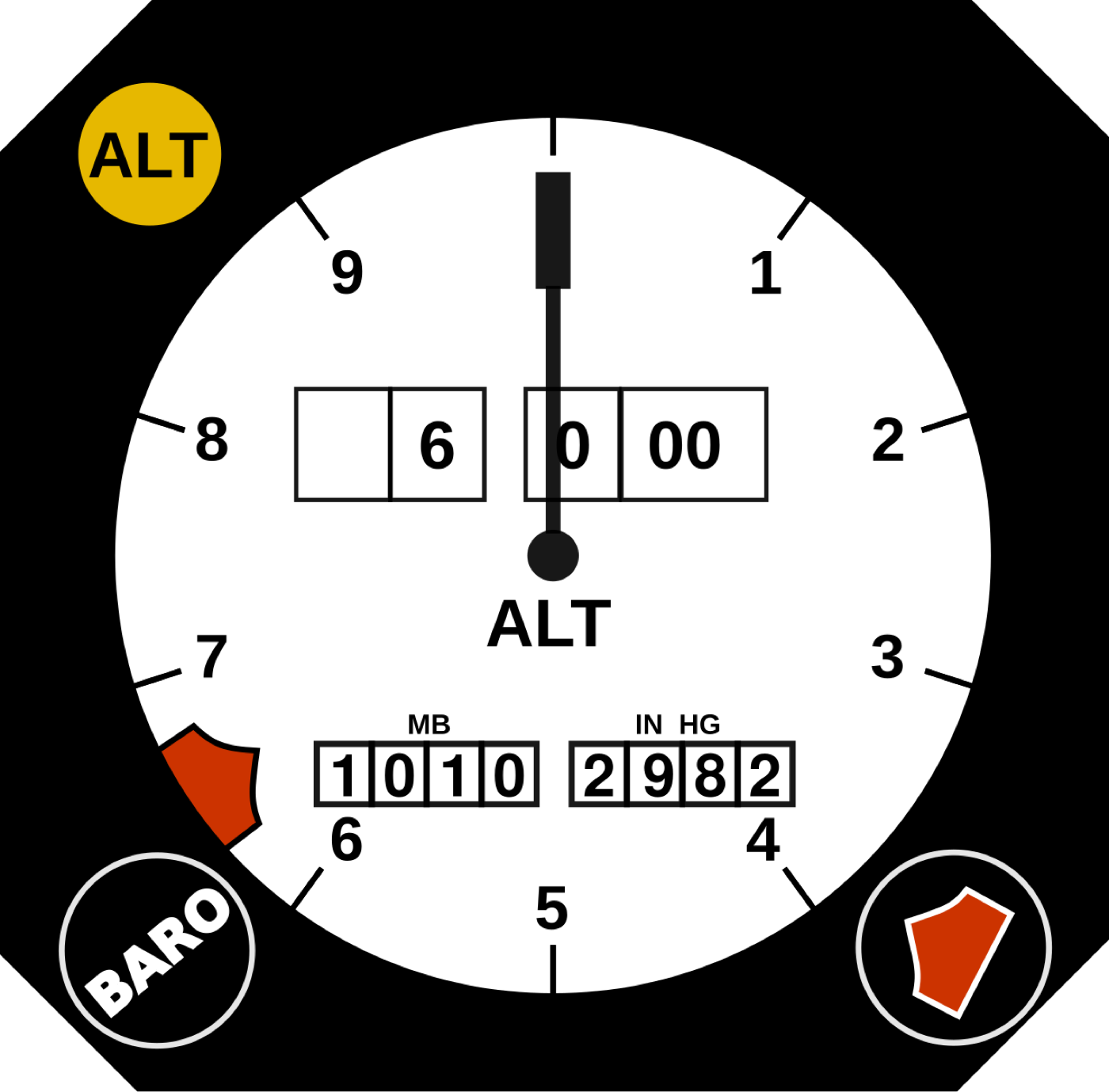
Image: Badseed / NASA-derived illustration · public domain (US) · Wikimedia Commons. Internet connection required.
QFF, Isobars and Pressure Analysis Charts
7.1 Definition of QFF
QFF is the observed station pressure reduced to mean sea level using the actual temperature conditions, with the reduction method specified in the reference material. It is intended to represent mean sea-level pressure for meteorological analysis.
QNH and QFF both relate aerodrome pressure to mean sea level, but they use different assumptions. QNH uses ISA assumptions for altimeter purposes; QFF uses actual temperature in the meteorological reduction. Therefore, QNH and QFF may differ when the actual temperature is not equal to ISA and the station is not at mean sea level.
7.2 Why QFF matters to meteorologists
Weather analysis charts need pressures that can be compared at a common reference level. Meteorological services therefore reduce station pressure to mean sea level and plot the resulting values. In the and texts, the mean sea-level pressure used for analysis is identified as QFF.
7.3 Isobars
An isobar is a line joining points that have the same atmospheric pressure at the same time and reference level. On a standard surface analysis chart, isobars are commonly drawn using mean sea-level pressure values.
7.4 Interpreting isobar spacing
Isobars show the horizontal pressure pattern. Where isobars are close together, pressure changes more rapidly over a given horizontal distance and the pressure gradient is stronger. Where they are widely spaced, the gradient is weaker. The pressure gradient is one of the factors influencing wind speed; actual wind also depends on other forces and friction.
7.5 Pressure tendency
Pressure tendency is the change in pressure over a specified period. A barograph provides a continuous record, while routine observations provide time-stamped pressure values. A falling pressure may be associated with an approaching low-pressure system, but interpretation must consider the wider synoptic pattern, local effects and normal diurnal variation.
Pressure and Altimetry: Applied Calculations
Pressure is central to barometric altimetry. An altimeter senses static pressure and converts it into an altitude indication using a standardised relationship. The instrument does not directly measure geometric height above the ground; it infers a pressure altitude and displays it relative to the selected pressure datum.
8.1 Height change for a small pressure change
Standard training material provides an approximate relationship for small pressure changes (less than about 50 hPa):
- H = approximate height change in feet per hPa
- T = mean absolute temperature in kelvin (K)
- P = pressure in hPa
Using ISA mean sea-level values, T = 15 + 273 = 288 K and P = 1013.25 hPa:
Therefore, near mean sea level under ISA conditions, a pressure change of 1 hPa corresponds to approximately 27 ft of height change. This approximation changes with altitude and temperature.
8.2 Approximate height change at different levels
| Approximate level | Height change per 1 hPa |
|---|---|
| Mean sea level | 27 ft |
| 2,000 ft AMSL | 30 ft |
| 20,000 ft AMSL | 50 ft |
| 40,000 ft AMSL | 100 ft |
8.3 Worked example
At ISA mean sea level, estimate the height change corresponding to a pressure difference of 5 hPa.
Using approximately 27.3 ft/hPa: 5 × 27.3 = 136.5 ft.
This is an approximate small-change calculation, not a substitute for an approved altimetry model or operational procedure.
8.4 Operational caution: pressure setting and terrain clearance
An incorrect altimeter setting can create a difference between indicated altitude and the aircraft's actual vertical position relative to terrain or an aerodrome. Crews must obtain, cross-check and set the correct pressure information in accordance with current procedures, including transition altitude and transition level requirements.
Key terms
The essential vocabulary for this chapter. Revise them anytime with the flashcards.
- Atmospheric pressure
- The force per unit area exerted by the weight of the air above a point; it decreases with height.
- Hectopascal (hPa)
- The unit of pressure used in aviation meteorology; 1 hPa equals 1 millibar.
- Aneroid barometer
- An instrument that measures pressure using a sealed, partly evacuated capsule that expands and contracts; the basis of the altimeter.
- QFE
- The atmospheric pressure at aerodrome elevation; with QFE set, an altimeter on the runway reads zero.
- QNH
- Aerodrome pressure reduced to mean sea level using ISA assumptions; with QNH set, an altimeter on the ground shows aerodrome elevation.
- QFF
- Aerodrome pressure reduced to mean sea level using the actual temperature; used to draw isobars on surface charts.
- Standard pressure setting
- 1013.25 hPa, set when flying on flight levels above the transition altitude.
- Isobar
- A line on a chart joining places of equal pressure.
- Pressure gradient
- The rate of change of pressure with distance; closely spaced isobars mean a steep gradient and strong winds.
Revision Summary
- Atmospheric pressure is force per unit area, produced by the weight of the air above a surface.
- Pressure decreases with increasing altitude; the pressure change per unit height is not constant.
- 1 hPa = 1 mb. ISA mean sea-level pressure is 1013.25 hPa = 760 mmHg ≈ 29.92 inHg.
- A mercury barometer measures pressure through the height of a mercury column; an aneroid barometer uses a flexible evacuated capsule.
- A barograph records pressure continuously and helps identify pressure tendency.
- Pressure varies vertically, horizontally and diurnally.
- QFE is aerodrome reference pressure; QNH is reduced to MSL using ISA assumptions; QFF is reduced to MSL using actual temperature conditions.
- 1013.25 hPa is the standard pressure setting.
- An isobar joins locations with equal pressure at the same time and reference level.
- Near ISA MSL, 1 hPa corresponds to about 27 ft of height change; the relationship varies with altitude and temperature.
Additional illustrated references: The barometer and altimeter photographs/illustrations above are sourced from individual Wikimedia Commons file pages, each linked in its caption. For the scientific explanations, see the chapter's and reference texts. Online images require an internet connection and may be subject to their respective licenses.
Glossary
Chapter 2 — Knowledge Check
Answer all 20 questions. Select one answer for each question, then submit to see your score and explanations.